
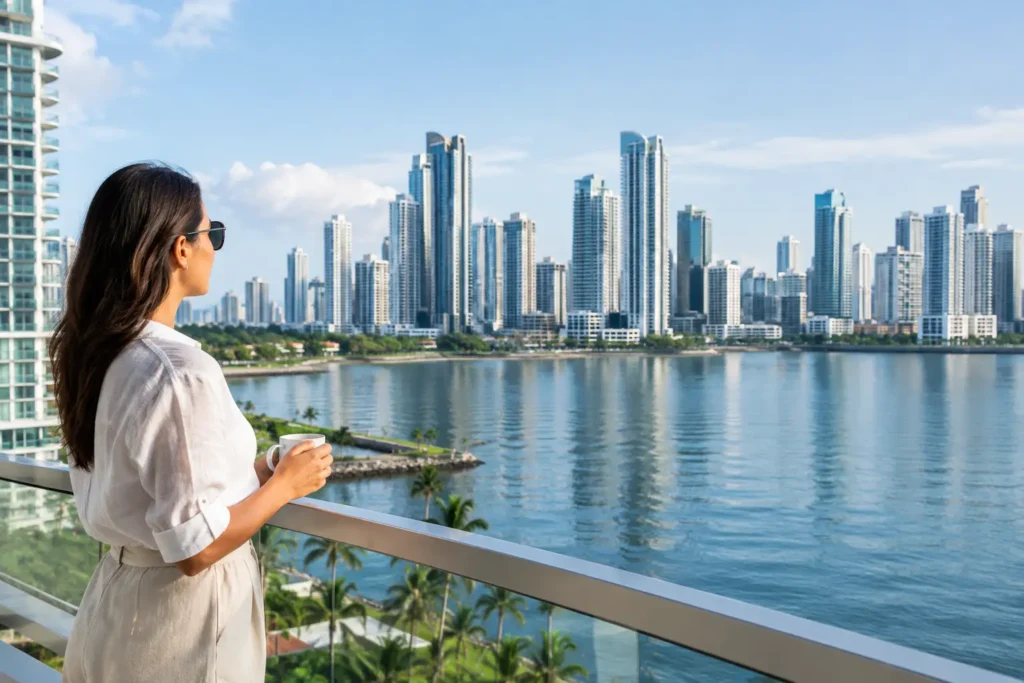
A Panama City address can shape your entire experience of living in Panama. The best Panama City neighborhoods for expats are not necessarily the flashiest towers or the areas with the most familiar restaurants. The right fit is the one that makes daily life easier – whether that means walking to coffee, getting to medical appointments without a long drive, having green space nearby, or simply coming home to a quieter street.
For many Americans considering a move, Panama City is an appealing first landing place. It offers modern hospitals, international grocery options, banking, restaurants, business services, and a large enough expat community that you are unlikely to feel isolated. But this is a large, busy tropical capital. Traffic, construction noise, building quality, and walkability can vary dramatically from one neighborhood to the next.
Before signing a lease or purchasing a property, spend time in the area at different hours. A neighborhood that feels peaceful at 10 a.m. may sit beside a late-night restaurant district, a major school route, or an active construction site. Here is how the city’s most popular expat areas compare in real everyday terms.
Best Panama City Neighborhoods for Expats at a Glance
There is no single “best” neighborhood for every newcomer. Retirees who want convenience and access to healthcare often look closely at Punta Pacifica or San Francisco. Remote professionals and people who enjoy city energy may prefer Obarrio, El Cangrejo, or Casco Viejo. Families and residents who value space, trees, and a more suburban feel often consider Clayton or Costa del Este.
Your priorities should lead the decision. A lower rent may mean fewer sidewalks, a longer trip to appointments, or greater reliance on a car. A waterfront high-rise may deliver beautiful views and building amenities, but it can also bring higher monthly costs and less neighborhood character at street level.
San Francisco: Balanced, Central, and Lived-In
San Francisco is often one of the strongest all-around choices for new expats. It sits in a central part of the city and has a more established, residential feel than some of the newer tower districts. You will find apartment buildings alongside small shops, pharmacies, restaurants, gyms, supermarkets, and everyday services.
The neighborhood is especially attractive to people who want a practical routine without feeling like they live inside a hotel district. Parque Omar, one of the city’s major green spaces, is nearby and gives residents a place to walk, exercise, or enjoy a little breathing room in an otherwise urban environment.
Not every block is equally walkable, and sidewalks can be uneven or interrupted. Traffic can also build quickly on major routes during weekday rush hours. Still, San Francisco offers a comfortable middle ground for couples, active retirees, and remote workers who want central access without the intensity of downtown.
Punta Pacifica: High-Rise Convenience and Healthcare Access
Punta Pacifica is known for luxury residential towers, ocean views, polished shopping areas, and proximity to some of Panama City’s leading private healthcare facilities. For retirees or anyone who places a high value on medical access, that convenience can be meaningful.
Life here tends to be vertical. Many residents rely on their building for amenities such as pools, gyms, security, social areas, and concierge services. The neighborhood is close to a major mall and has plenty of restaurants and services within a short drive.
The trade-off is that Punta Pacifica can feel less like a traditional neighborhood and more like a dense cluster of modern towers. Rents, purchase prices, and building fees can run higher than in other parts of the city. Walking is possible in places, but the humid climate, traffic, and large roads mean most residents still use a car or ride service regularly.
Costa del Este: Modern, Polished, and Business-Oriented
Costa del Este appeals to expats who like newer infrastructure, wide avenues, modern condos, and a more planned environment. It is home to international businesses, high-rise residences, shopping, and a large concentration of restaurants and services. Many families and working professionals appreciate its orderly feel and newer buildings.
For someone arriving from a U.S. suburb, Costa del Este can feel familiar in some ways. Buildings often have substantial amenities, and the area has a strong residential-commercial mix. It is also popular with professionals who work nearby and want to avoid crossing the city every day.
The important question is how much you want to drive. Costa del Este is not isolated, but commuting to other parts of Panama City during heavy traffic can test anyone’s patience. It can also be among the more expensive areas for housing. If your work, school, medical providers, and social life are centered nearby, that premium may be worthwhile. If not, a more central neighborhood could provide a simpler daily routine.
Obarrio and El Cangrejo: Walkable City Living
Obarrio and neighboring El Cangrejo are good options for people who want to be near the pulse of the city. These central areas have restaurants, cafés, grocery stores, banks, hotels, offices, and access to the Metro. They are particularly appealing to remote workers, entrepreneurs, and newcomers who want to step outside and have things happening around them.
El Cangrejo has a slightly more relaxed, eclectic personality, with tree-lined stretches, smaller businesses, and an international mix of residents. Obarrio feels more commercial and polished, with offices, upscale residential buildings, and easy access to central business districts.
Both areas reward people who value walkability, but neither is completely quiet. Expect traffic, city noise, and active streets. Building choice matters greatly. A unit facing a busy avenue can feel very different from one on a side street. For expats who do not want to own a car right away, these neighborhoods deserve a close look.
Clayton and Albrook: Green Space and a Slower Pace
Clayton and nearby Albrook offer a different version of Panama City. Once tied to the former Canal Zone, these areas have more trees, larger homes, low-rise residences, and a calmer atmosphere than the central tower districts. They are popular with families, nature lovers, and people who want room to breathe while remaining within the capital.
Clayton is close to parks, forested areas, international schools, and organizations connected to the City of Knowledge. Albrook offers shopping, transportation connections, and a more established residential feel. The setting can be especially appealing to those who picture Panama as lush and tropical, not simply urban.
The trade-off is car dependence. Daily errands, appointments, and dinners in central neighborhoods usually require driving or arranging transportation. The housing stock also varies widely, from apartments to townhomes and larger houses, so maintenance, security, and utility costs should be reviewed carefully.
Casco Viejo: Historic Charm With Real Trade-Offs
Casco Viejo is Panama City’s historic district, known for restored colonial buildings, rooftop views, boutique hotels, galleries, restaurants, and an unmistakable sense of place. For a person who values architecture, walkable streets, and a lively social scene, it can be an exciting place to live.
It is not the easiest fit for everyone. Tourism, nightlife, weekend activity, limited parking, and noise can become tiring if you are seeking a quiet retirement routine. Apartments may have exceptional character, but historic buildings can come with quirks, including stairs, smaller layouts, and maintenance considerations.
Casco Viejo is often best for expats who have spent enough time in Panama City to know they enjoy its energy. It can be wonderful for the right lifestyle, but it is rarely the neighborhood to choose based on photos alone.
How to Choose the Right Neighborhood Before You Commit
Start with your real weekly life, not your vacation life. Where will you shop? How often do you expect to visit doctors or specialists? Do you want to walk for exercise? Will you need easy access to the airport, a school, an office, or public transportation? These answers will narrow the map quickly.
Then evaluate a specific building as carefully as the neighborhood itself. Ask about backup generators, water reserve tanks, elevator maintenance, parking, internet options, security, pet policies, monthly fees, and current construction nearby. In Panama City, two buildings on the same block can offer very different living experiences.
It also helps to rent before buying. A short-term stay or a longer initial lease gives you time to learn the city’s traffic patterns, rainy-season realities, and the difference between what looks convenient online and what feels comfortable day after day. Through a relocation tour, Go Explore Panama can help you see neighborhoods with the practical questions in mind, rather than relying on listings from afar.
The best choice is the neighborhood that supports the life you want to build in Panama. Give yourself permission to test it, ask detailed questions, and choose comfort over appearances. A peaceful morning routine, a manageable trip to the doctor, and a home that feels right when the rain starts are often worth more than the view from the highest floor.